What Is an Atoll?
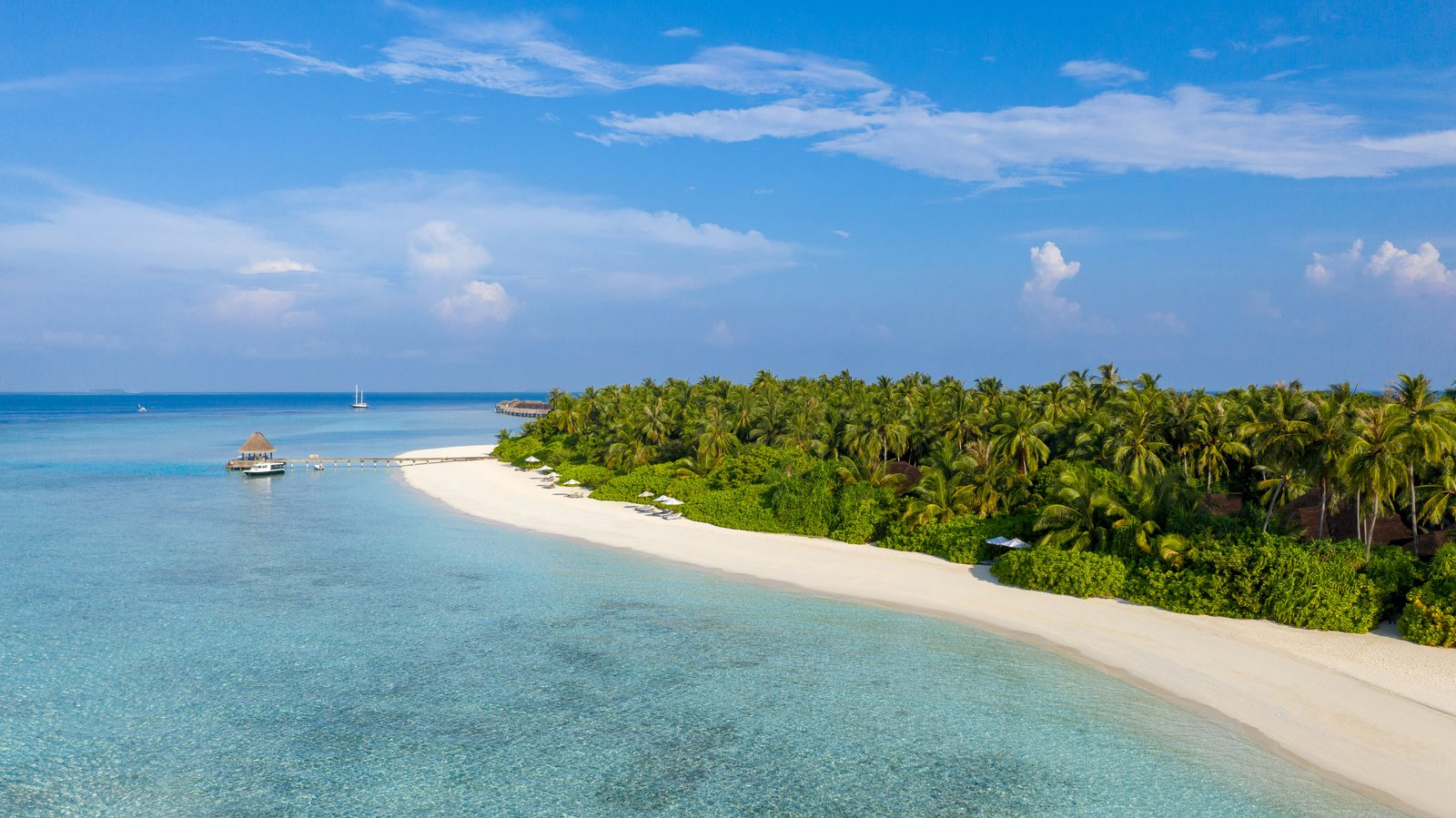
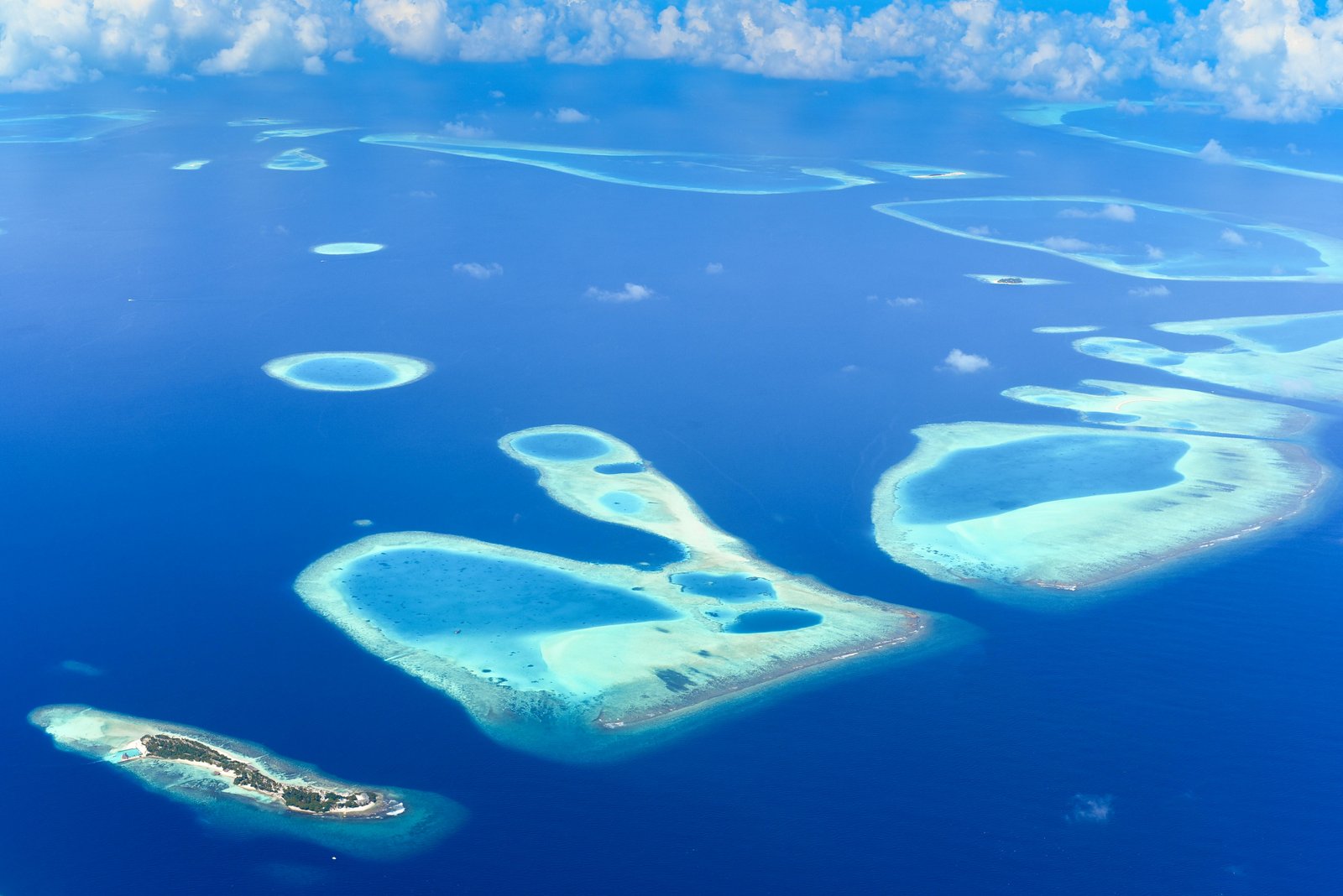
An atoll is a ring-shaped coral reef that surrounds a shallow lagoon.
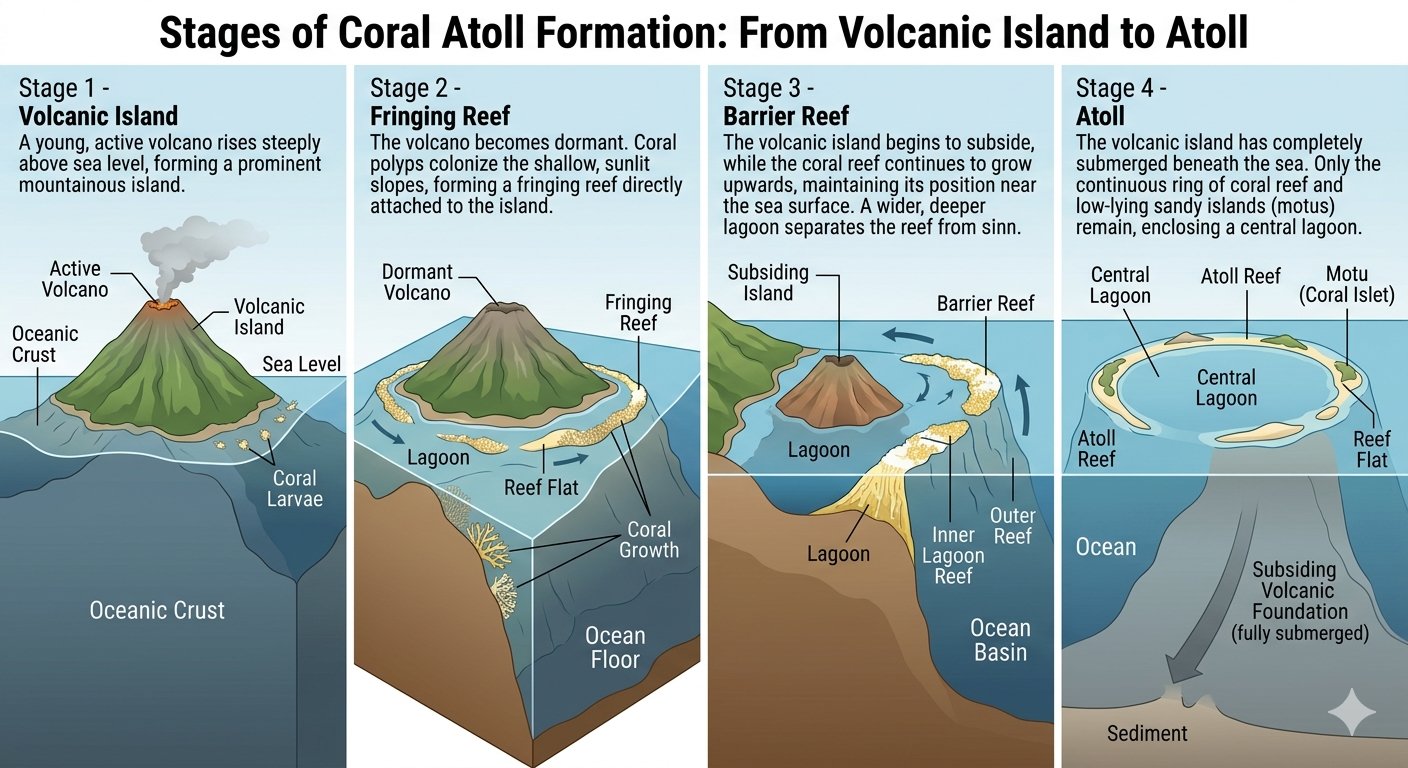
Over thousands of years, coral reefs grow upward around submerged volcanic islands. As the original volcanic island slowly sinks beneath the ocean, the coral continues growing toward sunlight near the surface.
Eventually the island disappears below sea level, leaving a ring of coral islands surrounding a central lagoon.
The Maldives is one of the largest atoll chains in the world.
How the Maldives Was Formed
Chagos–Laccadive Ridge.
Millions of years ago, volcanic islands formed along this ridge. Coral reefs began growing around these islands, slowly building massive reef structures.
As the volcanic islands gradually subsided beneath the ocean, the coral reefs remained near the surface, forming the circular lagoons we see today.
Today, the Maldives consists entirely of coral formations built on these ancient geological foundations.
The Structure of the Maldives
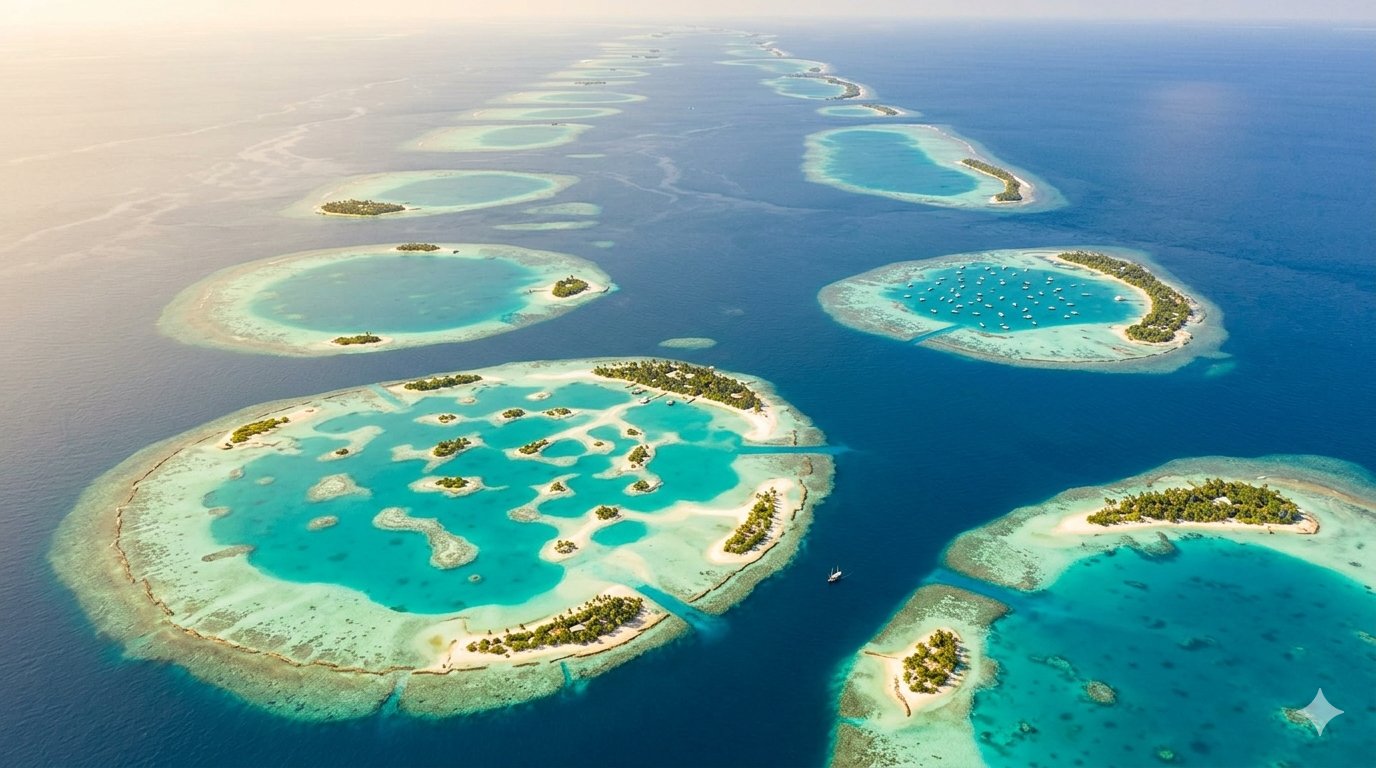
Rather than being a single group of islands, the Maldives is made up of a chain of coral atolls stretching across the Indian Ocean.
These atolls form two parallel rows running north to south.
Each atoll contains dozens of islands scattered around a lagoon, often separated by reef channels where ocean currents move between the open sea and the lagoon.
Some atolls contain only a few islands. Others contain more than a hundred.
Geographic Atolls vs Administrative Atolls
Travel guides often refer to atolls by name, but there are actually two systems used in the Maldives.
Natural Atolls
These are the true geographic coral formations created by reefs.
Examples include:
• Baa Atoll
• Ari Atoll
• Lhaviyani Atoll
Administrative Atolls
For government and postal purposes, the Maldives divides the country into administrative regions using code names.
Examples include:
• Haa Alif
• Haa Dhaalu
• Raa
• Kaafu
Travelers rarely need to understand these administrative divisions, as resorts and travel guides typically use the geographic atoll names.
Why Atolls Matter for Travelers
Understanding atolls becomes useful when planning a trip to the Maldives.
Each atoll sits at a different distance from the capital city, Malé.
This affects how visitors reach their resort.
Transfer time
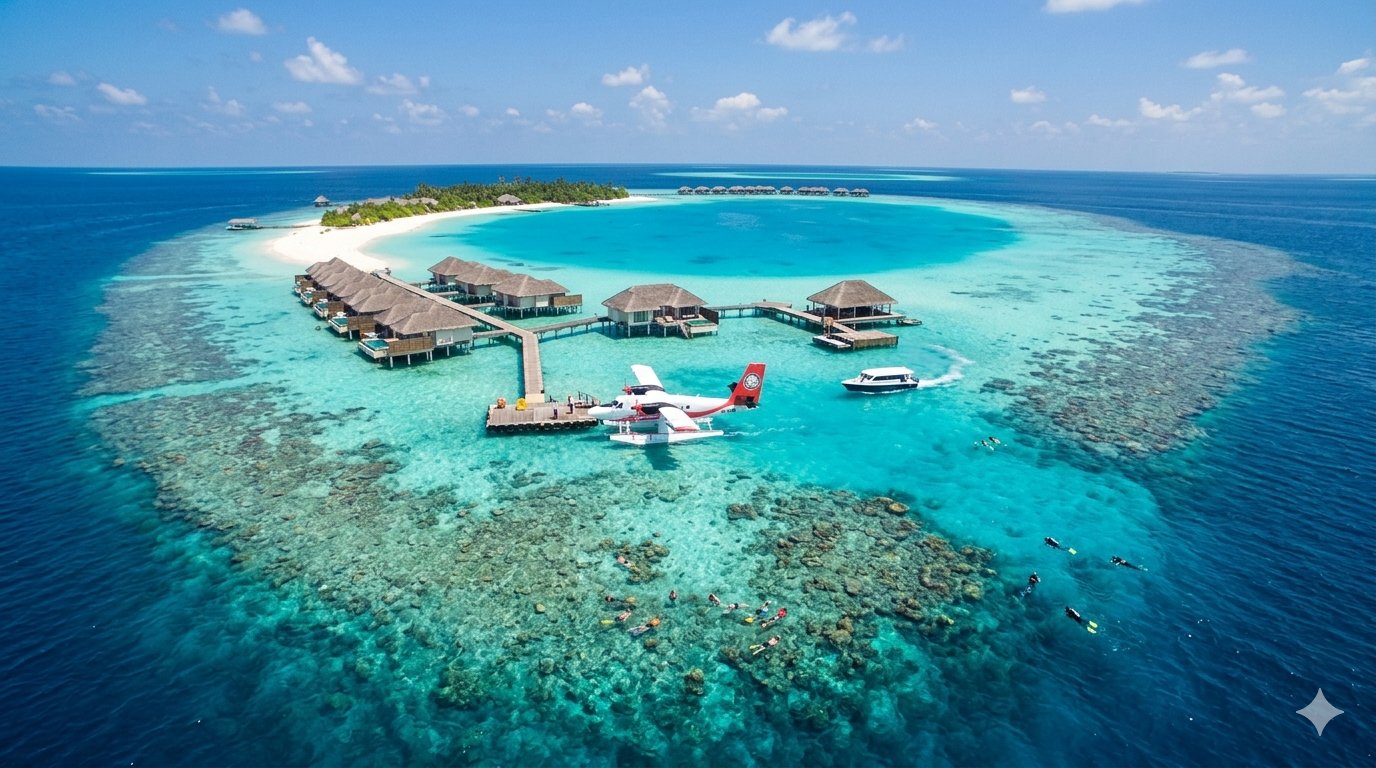
Resorts in nearby atolls may be reached by speedboat, while resorts farther away often require seaplane flights or domestic flights.
Reef conditions
Different atolls may offer slightly different reef environments, including:
• strong channels with larger marine life
• sheltered lagoons ideal for snorkeling
• outer reef walls used for diving
Resort distribution
Some atolls have many resorts, while others remain relatively quiet.
Well Known Resort Atolls
Although the Maldives contains many atolls, several are especially well known to travelers.
Baa Atoll
Baa Atoll is one of the most famous atolls in the Maldives.
The area is recognized as a UNESCO Biosphere Reserve, known for seasonal gatherings of manta rays and whale sharks.
North Malé Atoll
North Malé Atoll surrounds the capital region and contains many of the country’s earliest resort islands.
Because it lies close to Malé International Airport, many resorts here are accessible by speedboat.
Ari Atoll
Ari Atoll is widely known for diving and whale shark sightings.
It also contains one of the largest concentrations of resort islands in the Maldives.
Are All Atolls the Same?
Although all atolls share a similar coral structure, they can feel quite different.
Some contain wide lagoons and many small islands.
Others are more open to the ocean, with stronger currents and deeper reef channels.
These subtle differences influence:
• snorkeling conditions
• diving environments
• island spacing
• lagoon depth
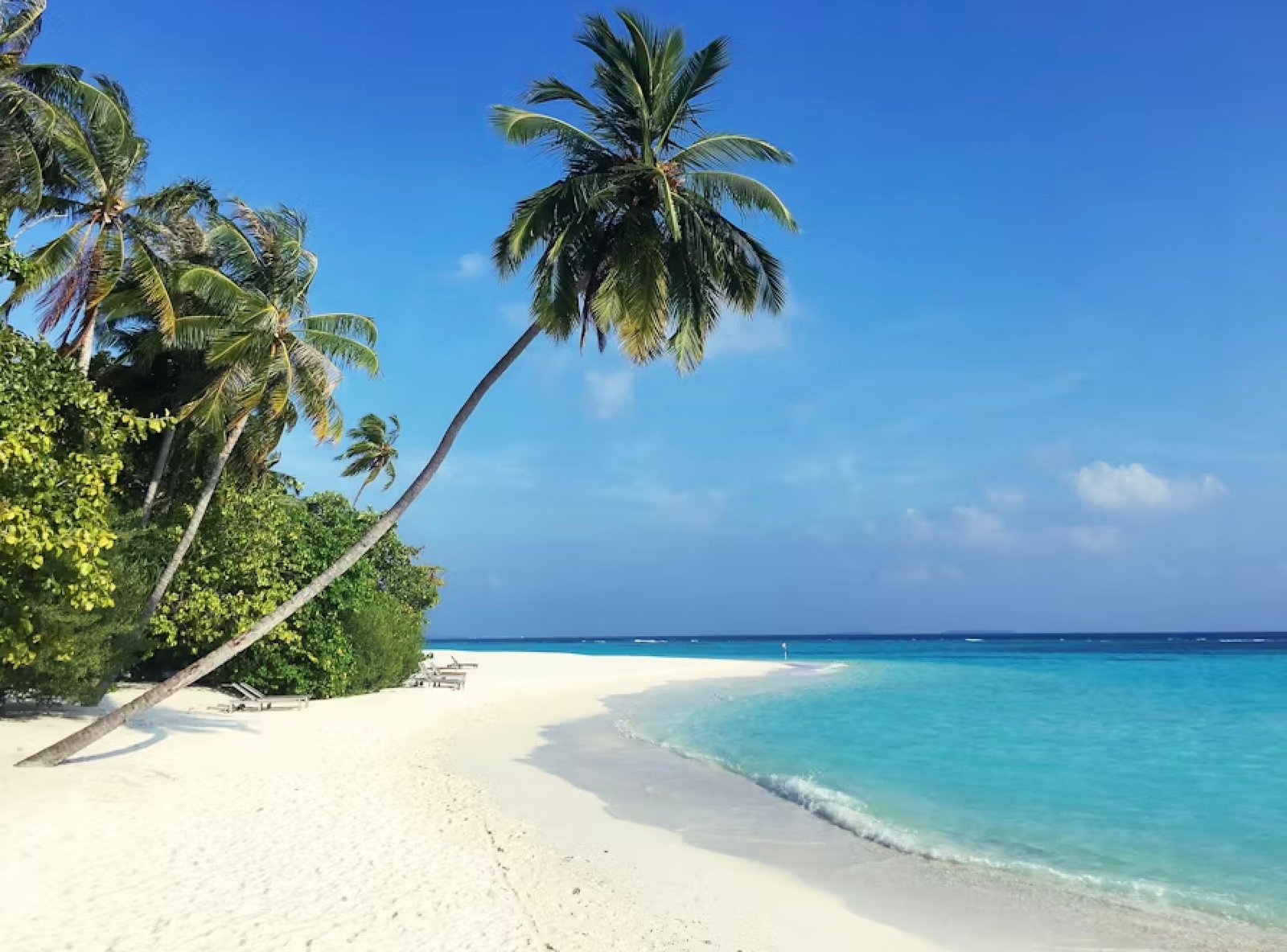
For travelers, however, the experience across the Maldives remains broadly similar: clear lagoons, coral reefs, and small islands scattered across turquoise water.